Home Page William Alexander Smith Time Line  Captains of the Battalion Presidents and Vice Presidents Company Officers Companies Recruitment Wednesday September19th 1979 Companies not in our Battalion but in Lincolnshire Grimsby and District Life Boys Battalion Camps Battalion Parades Memories Page Boys Brigade Gazettes Through The Ages Grimsby and District Battalion Band Page Battalion Charity Bed Push Grimsby District Football Competitions Events Church Lads and Church Girls Brigade Battalion Minutes Books Links
5th Cleethorpes Company

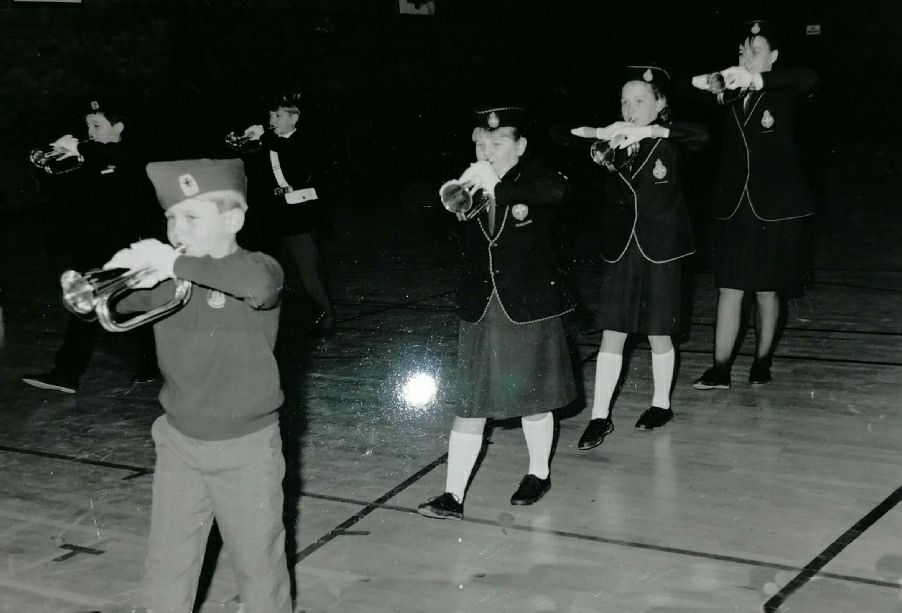
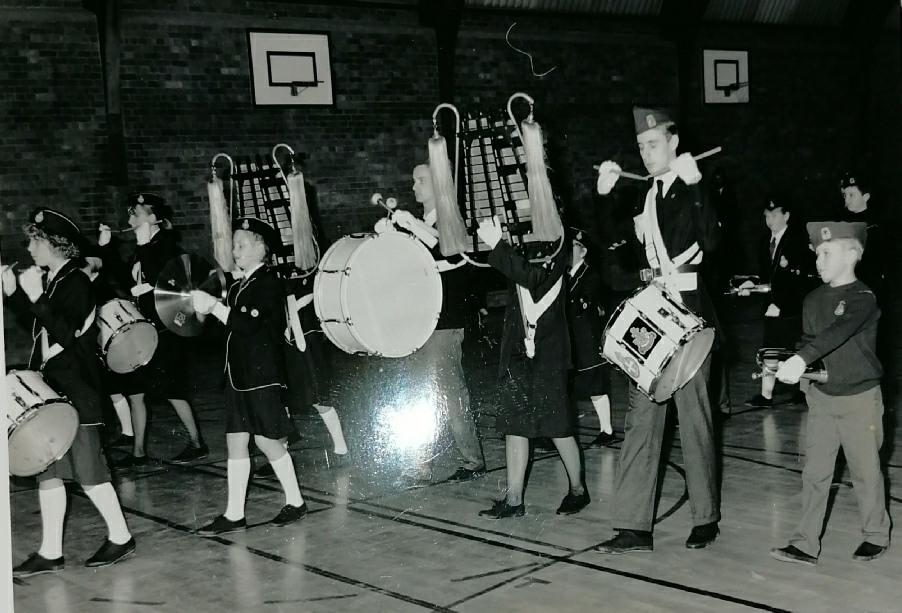
When 9th Grimsby disbanded from New Clee Church , Cleethorpes Road in 1965/66, Mr Walter Cook who was Captain there enrolled at Beaconthorpe Methodist Church, Grimsby Road as the 5th Cleethorpes Company. This Company was Gazetted 6th July 1966 with its first Life Boy Company. Later a Boys Brigade Company was Gazetted 20th June 1968. Mr Cook was Leader-in-Charge of the Life Boys Section from 6th July 1966 until is retirement in 1986. When the Boys Brigade Company was enrolled Mr Cook as Captain and joining him was, Rev. Douglas Brown as Chaplain with Mr Raymond Newman as Warrant Officer. The Life Boy Section Started with 12 boys and 2 Leaders. As the sessions went on 1967/1968 26 Boys, 1968/1969 28 Boys. After this session the Life Boys Section became the Junior Section and it became one. The Company grew from strength to strength. My old school friend joined the Company 29th January 1976 as a Warrant Officer and I joined the Company 27th November 1979 as a Warrant Officer. Mr Taylor left us in 1983 to Captain 2nd Cleethorpes Company at St Aidans Church Grimsby Road. Following Mr Cook’s retirement in 1986 I took over the role as Captain until 1994 when I was asked to take over as Captain of 1st Humberstone Company. During my stay at 5th’s we started and Anchor Boy Section.  Not long after we all discussed the chance of a joint band with the Girls Brigade Company. After a bit of beg, borrowing I finally got my hands on some band equipment from Armley near leeds at the BB shop that they let us have at a reasonable rate.  So we started with the help of Mr Best of 10th Grimsby Company to become Bands Master. After all the hard work with lots off blowing and drumming we had our first church parade with a band. So on the 1st May 1988 we paraded around the roads of our church. What a magnificent achievement for the history of the Company. The Company started to go to camp, with our first camp in Swanage 1985, our Company went to a further 21 Camps before the Battalion Camps were disbanded in 2007. 5th Cleethorpes Company won the Tent Competition a total of 6 times until the competition was revised in 1998. We did well in all events including, Athletics, Swimming and Cross Country.


Mr Jackson took over as Captain from 1994 until it disbanded.

Year Stared

Year Finished

Ministers Name

1914

1914

Rev. R. R. Spedding

1914

1917

Mrs. S.Ward

1917

1918

Rev. J. Stanwell

1918

1920

Rev. Walter Fisher.

1920

1923

Rev. William Potter

1923

1926

Rev. B. W. J. Redhead

1926

1932

Rev. R. Bingley Hall

1932

1937

Rev. L. G. Barker

1937

1941

Rev. H. Glulow

1941

1946

Rev. B. W. Tinkler

1946

1953

Rev. H. Lindley

1953

1960

Rev. G. Parkhouse

1960

1965

Rev. S. Weary

1965

1971

Rev. D. H. Brown

1971

1974

Rev. C. G. Wade

1974

1982

Rev. A. F. Herrick

1982

1989

Rev. R. Owen

1989

1996

Rev. M. Bradley

1996

1999

Rev. S. Abakah

1999

2001

Rev. K. Nally

2001

2002

Rev. D. Gillespie

2002

2004

Rev. R. Bassindale

2004

2007

Rev. M. Townsend

2007

2012

Rev. M. Greenwood

2014

?

Rev. K. Deakind

2024

2024 destroyed building by fire.


Ministers of Beaconthorpe Church


Presentation evening at the Company.

The lads were trained by the Officers of the Grimsby Sea Cadets on the River Freshney Behind the Bus Depot and Sainsburys.

They did a 8 week course to gain their Sailing and Canoeing Awards.


5th Cleethorpes Boys and Girls Brigade

Joint  annual photograph

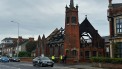
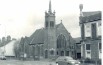
Methodist church. 1913-14. Red brick in Flemish bond with sandstone ashlar dressings. Welsh slate roof and spire. Arts and Crafts Gothic style. Aligned with ritual east end to north. 5-bay nave incorporating 2 gabled transeptal bays to north, square-section tower to south-west corner with west door, single-storey entrance porch to south end, single-bay organ chamber to north with adjoining single-storey section to north end containing ministers' vestry to north-west, choir vestry to north-east, and stores/boiler-house between.

 Ashlar-capped chamfered plinth, full-height raked diagonal buttresses to angles and between bays; nave has ashlar frieze above plinth with incised panels, sill stringcourse with flush ashlar band above.

 Nave east and west sides: 3-bay southern section has segmental-arched 3-light windows with cinquefoiled lights; 2-bay projecting transeptal sections have pointed 3-light traceried windows with hoodmoulds, twin coped gables. Single square-headed 3-light traceried window to north organ chamber.

South end: projecting ground-floor porch has flight of 4 steps with iron railings, buttresses flanking a pair of doorways with moulded ashlar segmental arches, chamfered jambs and a continuous hoodmould, double board doors with strap hinges, single square-headed windows to each side with ashlar sills and lintels; coped parapet ramped up to pointed hoods above both doors, and with ramped gablets above buttresses.

Tripartite south end of nave has large central 4-centred arched 5-light traceried window with hoodmould continued as stringcourse, ashlar stringcourse and triple stepped slits above; buttresses flanking right bay with lancet with hoodmould; coped gable with embattled steps above buttresses and a central carved finial.

Slightly tapered tower of 3 stages adjoins to left: full-height raked diagonal buttresses; 4 steps to west entrance with chamfered segmental ashlar arch, stepped hoodmould, double board doors with strap hinges.

Single recessed slits to second stage. Stepped-in upper stage with twin lancet belfry windows with ashlar sills and heads with hoodmoulds, brick modillioned and moulded ashlar cornice, coped embattled parapet ramped up to centre of each side in a pagoda line, buttresses rising to pinnacles with square bases bearing incised trefoiled panels and surmounted by corniced caps with carved finials. Octagonal needle spire with finial. Ministers' vestry has canted west end with sash windows, ashlar lintels and sills, hipped roof. Exposed rafter ends, crested ridge tiles throughout.

 Truncated lead-covered octagonal louvre to nave. All windows with Arts and Crafts style Perpendicular tracery. Interior. Nave has 5-bay single hammer-beam roof with arch braces and iron tie-rods, the truss to the transeptal sections carried on a pair of tall cast-iron columns. 4-centred arch of 2 orders to organ chamber, the inner moulded order on moulded corbels.

Original panelled pine pulpit with openwork quatrefoil panels. Pews arranged in curved rows. Panelled dado with moulded dado rail. Arts and Crafts stained glass, especially ornate to south window. Panelled doors with stained glass to lobby.

 Inscribed marble tablet at foot of tower records laying of foundation stones on 21st May 1913.


BEACONTHORPE METHODIST CHURCH, GRIMSBY ROAD

BEACONTHORPE METHODIST CHURCH, TENNYSON ROAD

History